
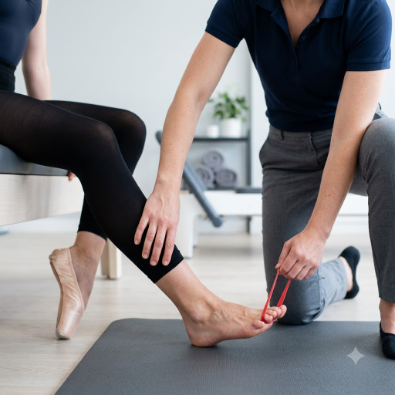
Before the Pointe Shoes Go On: What Dancers and Parents Need to Know About Pre Pointe Assessment in Sydney
For any young dancer training in classical ballet, the transition to pointe work is a milestone that carries enormous emotional significance. It represents years of dedication, physical development, and artistic growth. But the excitement surrounding this moment can sometimes overshadow a critical question: is the dancer’s body genuinely ready for the demands that pointe shoes place on developing feet, ankles, and the entire lower limb? A thorough pre pointe assessment in Sydney conducted by a physiotherapist with dance medicine expertise provides the objective, evidence-based answer that every dancer, parent, and dance teacher needs before that transition is made.
The Risk of Progressing Too Early
The consequences of moving to pointe work before the body is physically prepared are well documented in dance medicine literature. Growth plates in the feet and ankles of young dancers are vulnerable to stress injury, and the concentrated loading of pointe work can cause damage that affects long-term foot health and dancing capacity if introduced before adequate strength and structural maturity are in place.
Age alone is not a reliable indicator of readiness. Two dancers of the same age and training history can have significantly different levels of ankle stability, intrinsic foot strength, core control, and skeletal maturity. A clinical assessment removes the subjectivity from this decision and replaces it with measurable, evidence-based criteria.
What a Pre Pointe Assessment Covers
A comprehensive pre pointe assessment conducted by a dance-aware physiotherapist evaluates multiple dimensions of physical readiness. Key areas tested during the assessment include:
- Ankle plantarflexion range to confirm the dancer can achieve the degree of pointed foot required for safe pointe work through the full range of motion.
- Intrinsic foot muscle strength to assess the small muscles responsible for controlling arch stability and the fine motor demands of pointe.
- Single leg calf raise endurance to evaluate the calf complex’s capacity to manage the repeated loading demands of rising and working on pointe.
- Lower limb alignment to identify any valgus collapse at the knee or ankle that could increase joint stress during pointe work.
- Core and hip stability to assess the foundational strength that supports and controls all lower limb movement in ballet.
- Proprioception and single leg balance to test the dancer’s ability to maintain controlled, stable positions under the balance demands of pointe work.
- Skeletal maturity taking into account the dancer’s developmental stage and growth plate status as a clinical factor in the readiness decision.
Finding the Right Practitioner in Sydney
Sydney has a growing number of physiotherapists offering pre pointe assessments, but the quality and depth of these assessments varies considerably depending on the practitioner’s background and familiarity with dance.
Look for Dance-Specific Experience
Dance medicine is a specialised clinical area that requires genuine familiarity with ballet technique, training demands, and the injury patterns unique to dancers. A physiotherapist who primarily treats sporting or workplace injuries may not have the clinical lens needed to conduct a meaningful pre pointe evaluation.
Confirm AHPRA Registration
Before booking any appointment, verify the practitioner holds current AHPRA registration through the public register. This takes less than a minute and confirms the practitioner is fully qualified and licensed to practise in Australia.
Ask About the Assessment Tools Used
A clinically rigorous pre pointe assessment uses validated screening tools including the Functional Footprint assessment, the Airplane Test, and the single leg demi pointe rise. These are established evidence-based protocols, not a generic movement screen repackaged as a dance assessment.
Expect a Written Report
A written report of findings that can be shared with the dancer’s teacher is far more useful than a verbal summary. Clear clinical guidance gives the studio the information needed to support the dancer’s progression in an informed and coordinated way.
Check What Happens if the Dancer Is Not Ready
The right practitioner does not simply deliver a disappointing answer and send the family home. A targeted exercise programme addressing identified gaps, combined with a clear reassessment timeline, gives the dancer a structured path forward.
The Role of the Dance Teacher in the Process
A pre pointe assessment works best when it forms part of a collaborative conversation between the physiotherapist, the dancer, the parents, and the dance teacher. The clinical findings from the assessment provide the objective foundation, but the teacher’s knowledge of the dancer’s technique, consistency, and progress within the studio adds essential context.
The best outcomes occur when the physiotherapist and dance teacher are aligned — working from the same information and moving toward the same goal of introducing pointe work at the right time, in the right way, for the individual dancer.
Final Thoughts
Pointe work is a privilege that should be earned through genuine physical readiness, not simply granted based on age or time in the studio. A thorough pre pointe assessment in Sydney gives dancers, parents, and teachers the clinical confidence to make this important transition safely, at the right moment, and with a clear plan in place. Invest in the assessment before the shoes, and the foundation it builds will support a dancer’s progress for years ahead.