
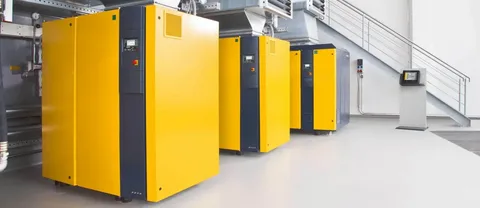
Planning an industrial air compressor installation involves more than simply positioning a machine in a workspace. Industrial systems are larger, more complex, and support continuous, high-pressure air supply to multiple tools or systems. A correct installation ensures safety, energy efficiency, and long-term operational success.
Industrial sites in manufacturing, construction, and automotive sectors rely on stable compressed air systems to power machinery, drive tools, and automate processes. An error during installation can result in pressure drops, system leaks, overheating, or costly downtime. It is essential to follow proper procedures and align the system with site-specific requirements.
What Site Preparations Are Necessary?
- Space Allocation and Access
Choose a location that provides sufficient clearance for maintenance, ventilation, and operational movement. Allow space for future system expansion if needed. - Floor and Foundation Requirements
Ensure the flooring is flat, solid, and vibration-resistant. Some larger compressors may require mounting pads or vibration isolators to prevent structural stress. - Power Supply and Cabling
Verify that the power source matches the compressor’s voltage and phase. Dedicated cabling and circuit protection are necessary to handle electrical load safely.
What Ventilation and Cooling Considerations Are Needed?
- Room Ventilation Flow
Compressors generate heat during operation. A well-ventilated space allows for efficient heat dissipation, preventing temperature build-up that can reduce efficiency. - Heat Extraction Systems
In enclosed spaces, installing exhaust fans or ducting to extract warm air helps regulate room temperature. This is essential for continuous-duty compressors. - Ambient Conditions Monitoring
Monitor and control dust, humidity, and temperature. Excessive dust can clog filters, while humidity may cause internal corrosion if not managed.
How Is the Air Distribution System Designed?
- Piping Layout and Material
Use galvanised steel, aluminium, or copper pipes designed for compressed air. Avoid plastic pipes not rated for pressure, as they may crack or burst under load. - Loop vs. Branch Distribution
A loop system ensures balanced air pressure throughout the facility. Branch setups are suitable for smaller operations with fewer drop points. - Condensate Management
Include moisture traps, sloped piping, and drain points. This prevents water accumulation that can damage tools or reduce air quality.
What Safety Features Are Installed?
- Pressure Relief Valves
These valves release excess pressure if a fault occurs. Ensure they are tested and calibrated to the unit’s rated maximum pressure. - Isolation Valves
Installed at strategic points in the piping, these allow for safe servicing without shutting down the entire system. - Soundproofing and Signage
For noisy units, install barriers or enclosures to protect personnel. Clearly mark danger zones, pressure lines, and emergency shutoffs.
How Are Control Systems Integrated?
- Start/Stop Control Panels
Panels manage when and how the compressor operates. Some include programmable logic to start at specific times or based on air demand. - Pressure Sensors and Monitors
Install gauges and digital monitors at key points to track system performance. This helps detect leaks or inefficiencies early. - Remote Monitoring Options
Larger installations may integrate remote diagnostics, enabling engineers to monitor performance or receive alerts from a central control room.
What Testing and Commissioning Procedures Are Followed?
- Initial Pressure and Flow Tests
Technicians measure delivery pressure and flow rates at various points. This ensures the system meets operational requirements and confirms installation quality. - Leak Detection
Systems are pressurised and checked for air leaks using ultrasonic detectors or soapy water testing. Leaks waste energy and reduce performance. - System Calibration and Documentation
Once confirmed, pressure settings, electrical connections, and flow controls are calibrated. A full system report is generated for records.
Conclusion
A well-executed industrial air compressor installation involves careful site planning, correct piping and power arrangements, and thorough safety checks. Proper commissioning guarantees consistent pressure delivery and system longevity. With the right foundation, your compressed air setup becomes a reliable and efficient part of your industrial operations.