
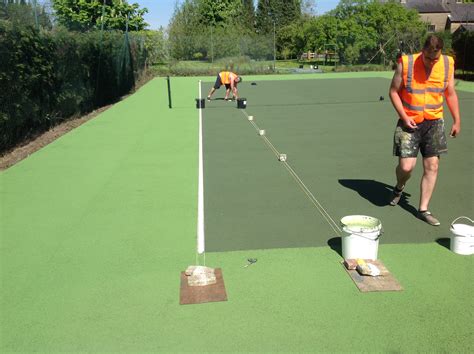
The lines on a tennis court may seem like a small detail, but they’re a big part of the game. Whether you’re a weekend player or a professional athlete, accurate tennis court markings ensure fairness, enhance performance, and reduce injury risks. They’re not just aesthetic—they’re fundamental to how the sport is played and experienced.
Let’s break down why precision in court markings truly matters.
Clarity Keeps the Game Flowing
In the heat of a match, players rely on visual boundaries to judge each shot. When lines are faded or misaligned, confusion can creep in—turning focus into frustration. Clearly defined tennis court markings eliminate second-guessing, allowing players to concentrate on strategy rather than questioning their position on the court.
This clarity also supports better communication between players and officials, helping maintain momentum and enjoyment in both casual and competitive settings.
Performance Hinges on Precision
Positioning and reaction time are everything in tennis. With properly marked courts, players can better gauge distance, make sharper angles, and execute shots more confidently. Visual cues from clear tennis court markings help with foot placement and spatial awareness—key elements for high-performance play.
In competitive environments, precision can influence outcomes. When every centimetre counts, reliable markings give players the confidence to push their limits.
Safety on the Court Starts with the Lines
Poorly maintained or inaccurate markings can pose a real hazard. If a line blends into the court surface or has shifted over time, players may misjudge their movement, leading to slips, awkward landings, or collisions.
Clear tennis court markings help reduce these risks by ensuring players move with certainty, avoiding the kinds of hesitation or overreaching that can cause injuries.
Consistency Across Courts and Clubs
Whether training at a local club or competing in a tournament across town, players expect consistency. Standardised and accurately applied tennis court markings allow athletes to adapt quickly between venues, without adjusting their game to unfamiliar dimensions.
This uniformity is essential for player development and fairness, particularly in competitive settings where regulation compliance is non-negotiable.
Technology Elevates Accuracy
Modern tools have made court marking more precise than ever. Laser-guided equipment and digital layout systems ensure that each line is perfectly placed, down to the millimetre. These technologies are especially valuable for facilities managing multiple courts and hosting professional events.
When used alongside regular maintenance, technology helps extend the court’s lifespan and keeps tennis court markings looking sharp and performing their function.
A Smart Investment for Better Play
Beyond player safety and performance, accurate markings contribute to the overall appeal and professionalism of a tennis facility. Crisp lines signal care, quality, and attention to detail—traits that attract serious players and increase repeat visits.
For clubs, schools, and public courts, investing in proper tennis court markings is a practical way to enhance reputation and user satisfaction.
Final Thoughts
Tennis court markings are more than just lines—they’re essential to the structure, safety, and enjoyment of the game. Whether you’re aiming to improve player experience, meet competition standards, or maintain a professional appearance, accurate markings are a non-negotiable element.
With the right technology, regular upkeep, and a focus on precision, your court becomes more than just a place to play—it becomes a space where players can thrive.