
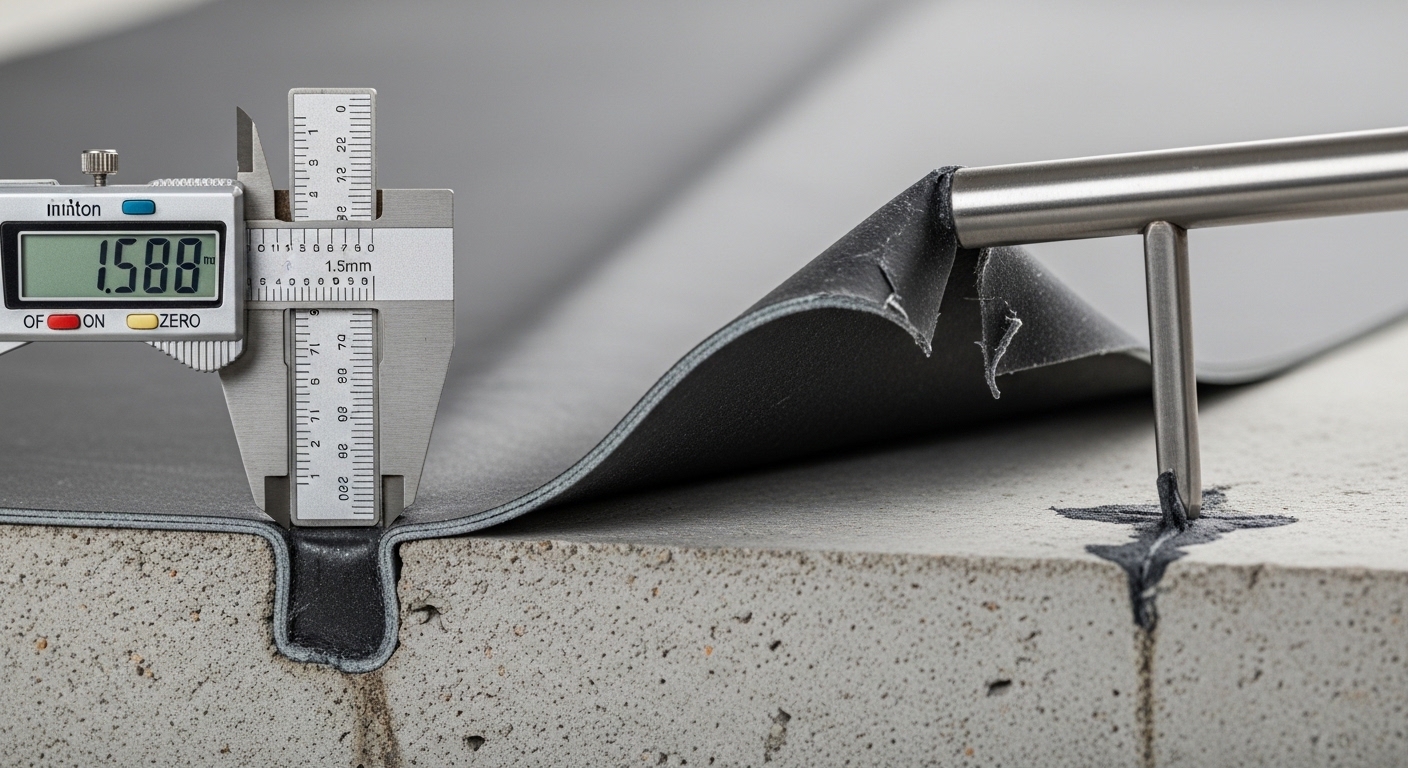
Waterproofing systems are designed to protect buildings from moisture ingress, structural damage and costly repairs. Conducting a waterproofing membrane thickness and adhesion test ensures the applied membrane meets performance standards and provides reliable protection. Without proper testing, insufficient coverage or poor bonding can lead to leaks and premature failure. Understanding these tests helps builders, contractors and property owners ensure compliance and durability.
What Is a Waterproofing Membrane?
A waterproofing membrane is a protective layer applied to surfaces to prevent water penetration. It is commonly used in bathrooms, balconies, roofs and basements.
- Liquid-applied membranes forming seamless barriers
- Sheet membranes bonded to substrates
- Flexible systems accommodating structural movement
- Designed to resist water pressure and moisture ingress
Correct application is essential for long-term performance.
Why Does Membrane Thickness Matter?
Membrane thickness directly influences durability and water resistance. If applied too thinly, it may fail under stress or prolonged exposure.
- Ensures adequate coverage over the entire surface
- Provides resistance against hydrostatic pressure
- Reduces risk of cracks or weak points
- Meets manufacturer and regulatory specifications
Consistent thickness ensures structural reliability.
How Is Membrane Thickness Tested?
Testing methods confirm whether the applied membrane meets required standards. Measurements are typically taken during and after application.
- Wet film thickness gauges used during installation
- Dry film thickness measurement after curing
- Multiple test points to confirm uniform coverage
- Comparison with specified performance requirements
Accurate testing prevents defects going unnoticed.
What Is an Adhesion Test?
An adhesion test measures how well the waterproofing membrane bonds to the substrate. Poor adhesion can cause peeling or blistering.
- Pull-off tests to assess bonding strength
- Inspection for delamination or separation
- Surface preparation evaluation
- Verification of compliance with technical standards
Strong adhesion ensures long-term durability.
Why Is Surface Preparation Important?
Even high-quality membranes can fail without proper preparation. Clean and stable substrates are essential for effective bonding.
- Removal of dust, oil and debris
- Repair of cracks and surface irregularities
- Ensuring correct moisture levels before application
- Priming where required for improved adhesion
Preparation significantly influences performance outcomes.
What Problems Occur Without Proper Testing?
Skipping thickness and adhesion testing can lead to hidden defects. Water intrusion may not become apparent until significant damage occurs.
- Leaks causing internal water damage
- Structural deterioration over time
- Costly repair and rectification works
- Potential non-compliance with building standards
Early testing prevents long-term complications.
Where Are These Tests Most Commonly Required?
Waterproofing performance is critical in areas exposed to consistent moisture. Testing ensures these high-risk zones remain protected.
- Residential bathrooms and laundries
- Rooftop terraces and balconies
- Basements and retaining walls
- Commercial wet areas
Compliance in these locations is particularly important.
How Do Testing Results Support Compliance?
Building regulations often require verification of waterproofing systems. Documented testing provides assurance of correct installation.
- Confirms adherence to project specifications
- Supports certification processes
- Demonstrates quality control standards
- Reduces liability risks for contractors
Proper documentation strengthens accountability.
Conclusion
Reliable waterproofing protects buildings from moisture damage and structural deterioration. Conducting a thorough waterproofing membrane thickness and adhesion test ensures the system performs as intended and complies with standards. By verifying proper application and bonding strength, these tests help prevent leaks, costly repairs and long-term failures. Careful testing is an essential step in delivering durable and dependable waterproofing solutions.