
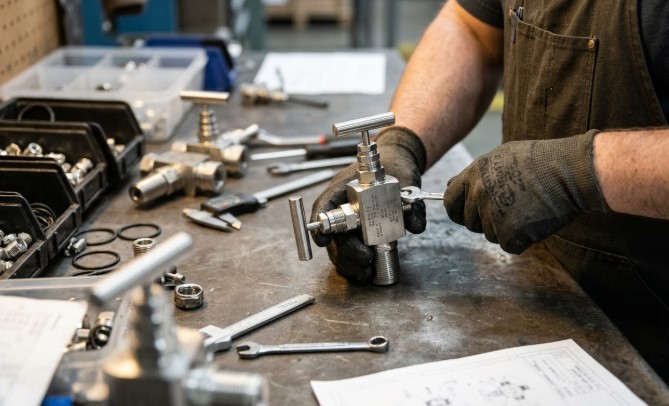
Precision control, accurate flow metering, and dependable leak-tight isolation are fundamental to maintaining safe operations across severe process environments. In high-pressure and high-temperature systems, specialized instrumentation valves serve as the front line of defense, safeguarding sensitive instrumentation, transmitters, and analytical equipment. Designed to perform reliably under extreme mechanical loads and severe media exposure, these precision-engineered valves ensure long service life and continuous process safety.
Core Features and Technical Capabilities
Instrumentation valves are engineered for critical applications where system integrity, tight shut-off, and minimum potential leak paths are non-negotiable. Standardized for pressure ratings up to 10,000 PSI and operating temperatures ranging from -54°C to +230°C, these components deliver consistent performance across aggressive media.
Key design highlights include a compact, space-saving footprint that simplifies installation within tight instrument enclosures and panel layouts. An anti-blowout stem design prevents stem displacement during sudden pressure surges, enhancing operator and plant safety. Additionally, a versatile selection of end connections—including NPT, BSP, SAE, and flanged ends—allows seamless integration into diverse piping and tubing circuits.
Material Selection and Traceability
Selecting the appropriate construction materials is essential to withstand chemical attack, pitting, and stress corrosion cracking. Standard configurations utilize high-grade SS316 and SS304 stainless steel, with custom material options such as Monel, Hastelloy, and Inconel available on request for specialized sour service or offshore environments.
For internal sealing, seat and packing options include PTFE, PEEK, RPTFE, and high-temperature graphite. Every valve body and wetted component undergoes rigid quality controlled procedures, ensuring full material traceability to certified test reports and factory pressure testing as per international standards.
Overview of Major Instrumentation Valve Types
A comprehensive product portfolio covers several primary valve categories, each built to address specific fluid management and protection challenges:
Instrumentation Ball Valves deliver quick, quarter-turn on/off operation with low torque requirements. They provide positive, tight shut-off for gas, liquid, and slurry lines operating under high pressure.
Instrumentation Check Valves prevent unwanted backflow in critical lines, protecting upstream pumps, meters, and delicate sensors from reverse pressure spikes through precise cracking pressure control.
Instrumentation Manifold Valves, available in 2, 3, and 5-valve configurations, consolidate multiple valve functions into a single integrally forged block. They are widely specified for differential pressure transmitters, static pressure gauges, and multi-line calibration setups.
Instrumentation Relief Valves serve a vital safety role by automatically releasing excess pressure when system parameters exceed design limits, preventing catastrophic equipment failure.
Instrumentation Needle Valves provide fine, gradual flow regulation and precision metering. Featuring metal-to-metal seats and finely threaded stems, they enable precise fluid adjustment in sensitive impulse loops.
Industrial Applications
Instrumentation valves are widely utilized across complex process loops and heavy engineering facilities:
In instrumentation panels and gauge mounting points, they enable isolated pressure measurement and convenient maintenance without shutting down main process lines.
In pressure transmitters and differential pressure monitoring, manifold valves streamline zero-checking, field calibration, and equalizing operations.
In sampling systems and analytical loops, they provide controlled extraction of process fluids for laboratory testing without exposing field personnel to high-pressure hazards.
In chemical injection lines and hydraulic testing rigs, they regulate the accurate dosing of catalysts and corrosion inhibitors directly into high-pressure pipelines.
Summary
Selecting the right instrumentation valve ensures reliable pressure control, zero leakage, and long-term durability in high-demand process applications up to 10,000 PSI. Partnering with an established instrumentation valve manufacturer in India provides access to custom material options, rigorous factory testing, and precision-engineered valve assemblies tailored to international specifications. For detailed technical data, dimensional drawings, and complete product ranges, download the catalog or send us a message with your specific project requirements.