
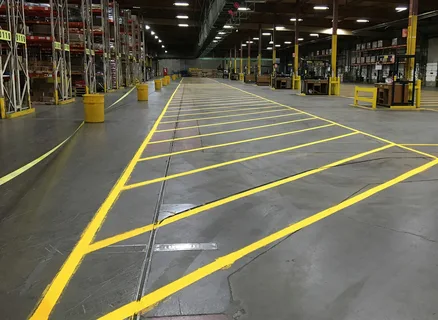
How Warehouse Line Marking Can Optimise Safety And Efficiency In Your Facility
In a warehouse environment, warehouse line marking is a critical aspect of maintaining safety, efficiency, and organisation. By clearly marking areas for walkways, storage, and machinery, you can optimise traffic flow and reduce the risk of accidents. Proper line marking helps ensure that your warehouse is compliant with safety standards and operates at peak efficiency. In this blog, we’ll explore the importance of warehouse line marking and how it can help improve safety, productivity, and organisation in your warehouse facility.
Why Is Warehouse Line Marking Important?
Safety and Risk Mitigation
One of the primary benefits of warehouse line marking is enhancing safety in the workplace. Clearly marked walkways, pedestrian zones, and machinery lanes help minimise the risk of accidents, such as workers being struck by forklifts or other machinery. Line markings help segregate pedestrian and vehicle traffic, ensuring that workers stay in designated safe areas.
Optimising Warehouse Operations
An efficiently organised warehouse leads to faster operations and improved productivity. With clear line markings, you can designate areas for inventory, machinery, and workstations. This reduces the time employees spend looking for tools or products and ensures that everything is in its proper place, improving overall workflow.
Compliance with Workplace Safety Regulations
Warehouse line marking helps ensure that your facility is compliant with workplace safety regulations. In Australia, businesses are required to follow Occupational Health and Safety (OHS) standards, which often include guidelines for floor markings to designate safety zones, emergency exits, and fire lanes. Non-compliance can result in penalties or safety violations, which can impact your business’s operations.
Reducing Workplace Fatigue
A well-organised warehouse with clearly marked lanes helps reduce confusion and fatigue for employees. With designated storage spaces, vehicle paths, and walkways, workers can move quickly and efficiently, without wasting time navigating through disorganised areas.
Improving Productivity and Efficiency
Clear and accurate warehouse line marking enables better coordination between workers, reducing delays caused by bottlenecks and confusion. By creating a logical flow of traffic for both employees and machinery, you can minimise downtime and increase the efficiency of operations.
How Can You Choose the Right Warehouse Line Marking Service?
Expertise in Warehouse Environments
When selecting a warehouse line marking service, choose a provider with experience in industrial settings. They will have a thorough understanding of the unique needs and challenges of warehouse environments, such as the need to mark hazardous areas, storage zones, and traffic lanes.
Use of Durable Materials
Warehouse floors endure heavy traffic, so it’s essential to use durable materials for the line markings. Opt for services that use high-quality, industrial-grade paint that can withstand the wear and tear of forklifts, foot traffic, and spills. Thermoplastic paint is often recommended for warehouses due to its durability and resistance to heavy usage.
Customisation for Specific Needs
Every warehouse is unique. If your warehouse has specific requirements, such as marking different zones for different types of products or creating custom pathways for forklifts, choose a provider that can offer customised line markings to meet your needs.
Knowledge of Safety Standards
Warehouse line marking must comply with Australian workplace safety regulations. Ensure that the service provider is knowledgeable about local safety standards and can help you meet all the necessary requirements for compliance.
Ongoing Maintenance and Updates
Warehouse line markings can fade over time due to heavy traffic and environmental factors. Make sure your line marking service offers regular maintenance and touch-up services to keep your warehouse organised and safe.
How Can You Extend the Life of Your Warehouse Line Markings?
Select High-Quality, Industrial-Grade Paint
Choose durable paints designed to withstand the heavy foot and vehicle traffic found in warehouses. These paints are formulated for high-traffic areas and can handle the wear and tear of daily use.
Regular Inspections
Regularly inspect the warehouse markings for signs of wear and fading. High-traffic areas, such as forklift lanes or loading zones, may need more frequent touch-ups to maintain their visibility.
Proper Surface Preparation
Ensure the warehouse floor is clean and smooth before applying the paint. Proper surface preparation ensures better paint adhesion and helps the markings last longer.
Periodic Repainting and Touch-Ups
Schedule periodic repainting or touch-ups to ensure that the line markings remain visible and sharp. High-traffic areas may require touch-ups every 6 to 12 months.
Professional Installation and Maintenance
Work with professional line marking services to ensure that your warehouse markings are applied correctly and with the best materials. They can also provide ongoing maintenance to keep your warehouse organised and compliant with safety regulations.
Conclusion:
Warehouse line marking is a vital component of creating a safe, efficient, and organised environment in any warehouse facility. By choosing the right service and maintaining your markings over time, you can enhance workplace safety, streamline operations, and meet compliance standards. With the right approach, warehouse line markings will help optimise your warehouse’s productivity and reduce the risk of accidents.