
Protecting Your Build Site: What You Need to Know About Construction Security
Building sites are busy, high-value environments and that makes them prime targets for theft, vandalism, and unauthorised access. From expensive machinery and raw materials to tools left overnight, the assets on a typical construction site represent significant financial exposure. That’s why investing in professional construction security from the early stages of a project isn’t just smart practice — it’s an essential part of responsible site management.
Why Construction Sites Are Particularly Vulnerable
Unlike commercial premises with fixed layouts and controlled access, construction sites are constantly evolving. Fencing shifts as the build progresses, entry points change, and the sheer size of most sites makes complete visibility a genuine challenge.
Several factors make these environments especially susceptible to security risks:
- High-value equipment and materials – Copper wiring, power tools, scaffolding, and heavy machinery are all attractive targets for theft
- After-hours exposure – Most sites are unstaffed overnight and on weekends, creating windows of opportunity for intruders
- Multiple contractors and subcontractors – A rotating workforce makes it harder to monitor who is legitimately on site at any given time
- Limited natural surveillance – Partially constructed buildings, hoardings, and site fencing can create concealed areas that are difficult to monitor
- Incomplete perimeter security – Fencing, gates, and barriers are often temporary and can be breached more easily than permanent structures
Understanding these vulnerabilities is the first step toward building a security strategy that actually works.
Key Elements of an Effective Site Security Strategy
Physical Barriers and Access Control
A strong perimeter is the foundation of any site security plan. Robust hoarding, lockable gates, and clearly marked access points help to deter opportunistic intruders and channel authorised personnel through controlled entry routes.
Access control systems — including swipe cards, PIN entry, or biometric readers provide an auditable record of who enters and exits the site and when. This is especially valuable on larger projects where dozens of workers may be on-site simultaneously.
Manned Guarding
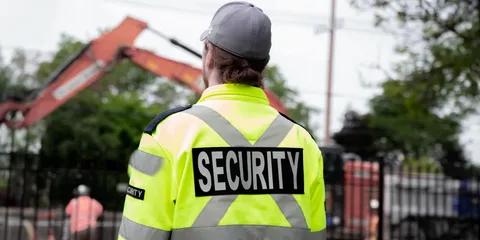
There is no substitute for a trained security officer on the ground. Manned guarding provides a visible deterrent, a human presence capable of exercising judgement, and an immediate response capability when something goes wrong.
Guards can conduct regular patrols across different areas of the site, check credentials at entry points, monitor CCTV feeds, and liaise directly with emergency services when required. For high-value projects or sites in areas with a history of theft, round-the-clock manned guarding is often the most effective solution.
CCTV and Remote Monitoring
Modern CCTV systems — particularly those with motion-activated alerts and remote monitoring capabilities allow a site to be observed in real time, even when no physical guards are present. Footage serves as both a deterrent and a source of evidence if an incident does occur.
Temporary CCTV towers are now widely used across Australian construction sites, offering flexible placement as the build progresses without the need for permanent infrastructure.
How Does Construction Security Reduce Project Costs
It might seem counterintuitive to frame security as a cost-saving measure, but the numbers tell a clear story. Equipment theft alone costs the Australian construction industry hundreds of millions of dollars each year. When tools or materials are stolen, projects are delayed, insurance premiums rise, and replacement costs add up quickly.
Beyond theft, vandalism can cause structural damage, destroy fit-outs, and set timelines back by weeks. Unauthorised access by members of the public — particularly on urban sites — also creates serious liability exposure for project owners and builders.
A well-implemented security plan reduces all of these risks significantly.
Common Questions About Site Security
When should security be arranged for a construction project?
Ideally, security planning should begin before work starts on site. The moment materials and equipment begin arriving, the risk profile increases. Waiting until a theft or incident occurs before taking action almost always costs more in the long run.
Are construction sites legally required to have security?
While there is no single national law mandating construction site security in Australia, principal contractors have significant obligations under work health and safety legislation to control site access and protect both workers and the public. Failure to do so can result in substantial penalties.
What’s the best approach for a smaller residential build?
Even smaller sites benefit from basic measures — good perimeter fencing, lockable tool storage, visible CCTV signage, and alarm systems. For higher-risk periods such as when expensive fit-outs are underway, temporary manned guarding may be worth considering.
Building Security Into Your Project from Day One
The most effective security strategies are those integrated into the project plan from the outset — not bolted on after problems arise. Engaging a qualified security provider early allows for a thorough site assessment, a tailored risk management plan, and the right mix of physical, technological, and human security measures.
Regular reviews throughout the project lifecycle are also important. As the build progresses and site conditions change, so too should the security approach.
Final Thoughts
A construction project represents a major investment of time, money, and resources. Protecting that investment requires a proactive approach — one that goes well beyond a padlock on the front gate. Professional construction security gives project owners, builders, and contractors the peace of mind to focus on what matters most: delivering a quality build, on time and on budget.
If you’re in the planning phase of a new project, make site security part of the conversation from the very beginning. It’s a decision that pays for itself many times over.