
Why Should You Choose Electric Sockets With USB For Your Home?
Modern homes rely on smartphones, tablets, smartwatches, wireless headphones and other electronic devices every day. Keeping these devices charged can become inconvenient when power outlets are limited or charging adapters take up too much space. A practical solution is to install electric sockets with USB, which combine traditional power outlets with built-in USB charging ports.
These sockets offer a convenient way to charge compatible devices without requiring a separate USB power adapter. They are suitable for bedrooms, kitchens, home offices, living rooms and other areas where people regularly use electronic devices. Understanding their benefits, features and installation requirements can help homeowners decide whether this upgrade is right for their property.
What Are USB Power Sockets?
USB power sockets are electrical outlets that include one or more USB ports alongside conventional power points. They allow users to connect compatible electronic devices directly using a USB charging cable.
Depending on the model, these outlets may include USB-A ports, USB-C ports or a combination of both. USB-A is commonly found on older charging cables, while USB-C is increasingly used in modern smartphones, tablets, laptops and other electronic equipment.
Unlike a standard wall outlet, which generally requires a separate charging adapter for USB devices, an integrated USB outlet provides charging access directly at the wall. This can reduce clutter and make everyday charging more convenient.
However, charging performance varies between models. Buyers should check the supported output, charging standards and device compatibility before selecting a product.
What Are the Main Benefits of USB Power Outlets?
Reduced Cable and Adapter Clutter
One of the most noticeable advantages is a tidier living space. Traditional charging arrangements often involve bulky adapters that occupy valuable outlet space. Built-in USB ports help reduce the need for separate adapters for compatible devices.
This is particularly useful in small bedrooms, shared workspaces and kitchens where several appliances and electronic devices compete for available outlets.
A cleaner charging setup can also make desks and bedside tables easier to organise. Users can keep charging cables accessible without filling the surrounding area with multiple adapters.
Convenient Charging for Everyday Devices
USB power outlets make it easier to charge frequently used electronics throughout the home. Smartphones, tablets, wireless earbuds, smartwatches and other compatible accessories can be connected using the appropriate cable.
Installing them near a bedside table, office desk or kitchen counter provides convenient access to charging points where they are most useful.
Before connecting a device, users should confirm that the outlet supports the device’s charging requirements. Some products offer basic USB charging, while others support faster charging technologies.
Better Use of Available Wall Space
In homes with limited electrical outlets, combining conventional power points and USB ports can improve the available charging arrangement. Instead of using a separate adapter for every compatible device, users can connect certain electronics directly to the USB ports.
This can be helpful in apartments, compact home offices and family rooms where several people need to charge their devices.
The actual number of devices that can charge simultaneously depends on the outlet’s design and total power output. Checking the manufacturer’s specifications helps prevent unrealistic expectations about charging capacity.
A Modern Look for Home Interiors
Electrical accessories contribute to the overall appearance of a room. Contemporary USB outlets are available in different finishes and designs to complement modern furniture, wall colours and interior styles.
Homeowners renovating a property may choose matching outlets for bedrooms, kitchens and workspaces to create a consistent appearance.
However, appearance should not be the only consideration. Electrical safety, product certification, charging performance and compatibility should remain the main priorities when selecting an outlet.
Where Should You Install USB Charging Outlets?
Choosing the right location can make these outlets more useful in everyday life. Consider the following areas when planning an electrical upgrade.
Bedrooms
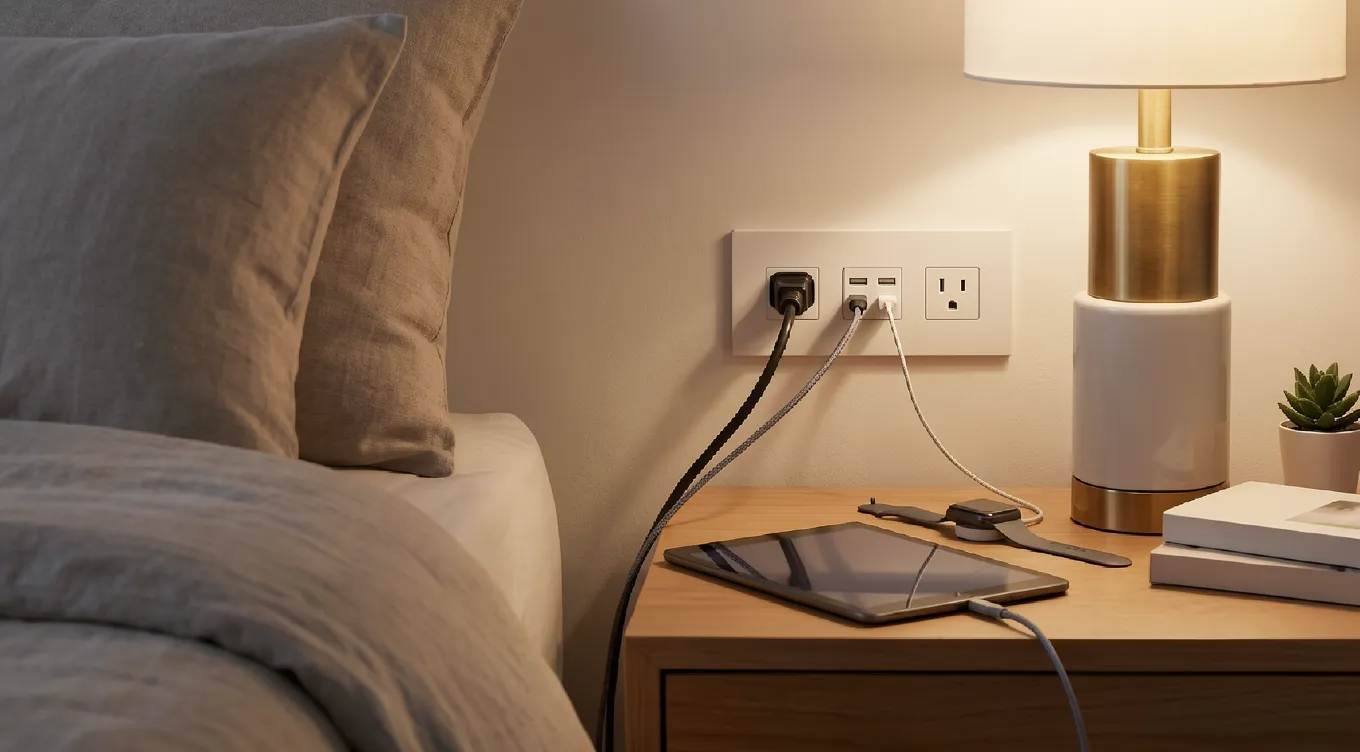
Bedrooms are popular locations because smartphones, smartwatches and other personal electronics often charge overnight. A USB outlet near a bedside table can keep charging cables within easy reach.
The outlet should be positioned safely away from bedding, water sources and areas where cables could become tangled or create a tripping hazard.
Home Offices
Home offices frequently contain smartphones, tablets, wireless accessories and other USB-powered equipment. Adding suitable charging outlets near a desk can help keep the workspace organised.
For laptops and other high-power devices, check whether the outlet provides sufficient USB-C power delivery. Not every USB-C port supports laptop charging, and some laptops require a higher power output than basic wall outlets provide.
Kitchens
A kitchen charging point can be useful for phones, tablets and other devices used while following recipes or managing household tasks.
Electrical installations in kitchens require particular attention because water, heat and cooking activities can create additional risks. Outlets must be installed in appropriate locations and comply with local electrical requirements.
Living Rooms
Living rooms often contain several personal devices, including phones, tablets, headphones and gaming accessories. USB charging outlets can provide convenient access without relying on multiple adapters.
Before installation, consider where people usually sit, where charging cables will reach and whether the outlet will remain accessible without interfering with furniture.
How Do You Choose the Right USB Socket?
Selecting the correct product involves more than comparing prices or choosing a design. Several technical features influence its suitability.
USB-A or USB-C Ports
USB-A ports are useful for compatible cables and older accessories. USB-C ports offer a reversible connector and are increasingly common in modern devices.
A combination of both may suit households with a mixture of older and newer electronics. Consider the devices used most frequently before choosing the port configuration.
Charging Speed and Power Output
Charging speed depends on the outlet’s output, supported charging protocol, cable quality and the connected device.
Some USB-C outlets support USB Power Delivery, which can provide higher power to compatible devices. Others offer lower output intended mainly for phones and small accessories.
Check the manufacturer’s specifications rather than assuming every USB-C port provides fast charging. When multiple ports operate simultaneously, the available power may also be shared between connected devices.
Safety and Product Quality
Electrical safety should be a priority when purchasing wall outlets. Look for products that comply with the applicable electrical standards and certification requirements in your country.
For Australian properties, confirm that the product is suitable for the local electrical system and meets relevant Australian requirements. A qualified electrician can help verify suitability and installation arrangements.
Avoid choosing an outlet solely because it is inexpensive. Poor-quality electrical accessories may present safety risks, particularly when used continuously or installed incorrectly.
Compatibility and Installation Requirements
Check the outlet’s dimensions, wiring requirements, mounting arrangement and compatibility with the existing electrical installation.
Some USB outlets may have different dimensions from standard wall plates, so the available wall space and mounting box should be assessed before purchasing.
Fixed electrical work should be completed by a suitably licensed electrician in accordance with applicable local regulations. DIY electrical installation can create risks of electric shock, fire and damage to connected equipment.
Are USB Wall Outlets Better Than Separate Charging Adapters?
Both options have advantages, and the better choice depends on how a household uses its devices.
Built-in USB outlets provide a permanent charging point and can reduce adapter clutter. They are particularly useful in locations where people charge devices regularly.
Separate adapters offer greater flexibility because users can carry them between rooms or take them while travelling. They can also be replaced independently when charging technology changes.
Another important consideration is power output. A high-quality dedicated charger may provide faster charging or more power than a built-in USB outlet. For demanding devices, such as laptops, checking the actual output specifications is essential.
Homeowners who value convenience and a tidy appearance may prefer integrated outlets in frequently used locations while retaining separate chargers for travel and specialised equipment.
Common Mistakes to Avoid When Buying USB Outlets
A few simple checks can help prevent unsuitable purchases.
- Choosing a product without checking its electrical certification and compliance.
- Assuming all USB-C ports support fast charging or laptop charging.
- Ignoring the combined power output when several devices are connected.
- Selecting a design that does not fit the existing mounting arrangement.
- Installing outlets too close to water sources or other unsuitable locations.
- Attempting fixed electrical installation without the required qualifications.
- Overlooking future needs, such as additional USB-C devices or higher charging requirements.
Reviewing these factors before purchasing can help homeowners choose a product that suits their devices, available space and electrical installation.
Conclusion
Upgrading to modern charging outlets can make everyday device charging more convenient, reduce adapter clutter and improve the organisation of living spaces. The right product depends on charging requirements, port types, power output, electrical compatibility and installation conditions.
When comparing electric sockets with USB, prioritise certified products, reliable performance and suitable charging specifications rather than appearance or price alone. With careful selection and professional installation, homeowners can create a more practical charging setup for bedrooms, kitchens, living rooms and home offices.